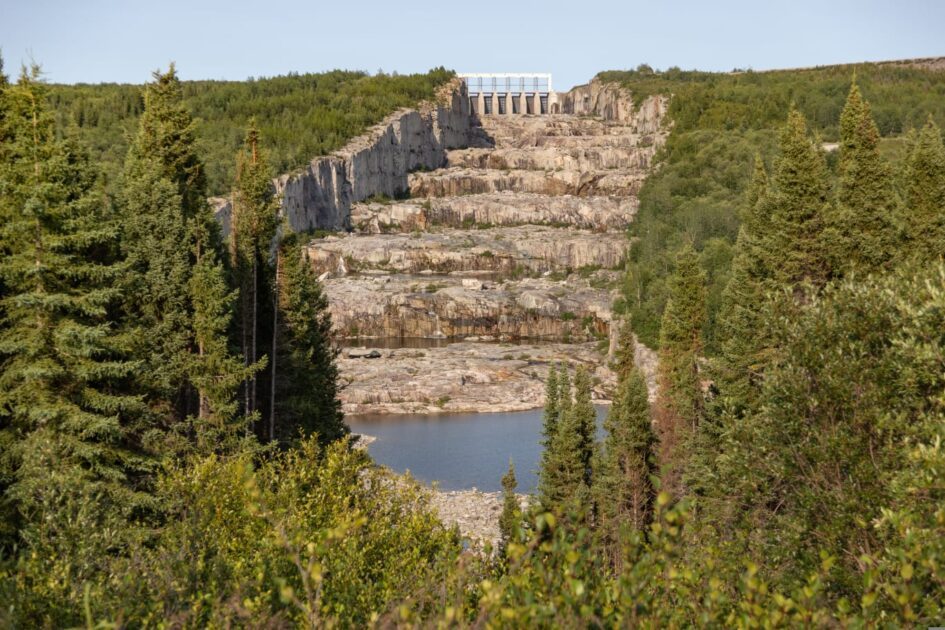
China has achieved another major engineering milestone after the World’s Highest Dam officially began generating electricity. The first generating unit of the Shuangjiangkou Hydropower Station in southwest China’s Sichuan Province was successfully connected to the national power grid on Friday, marking the start of operations at one of the world’s most ambitious hydropower projects.
The project is a significant milestone in modern engineering, as it is the first earth-rock dam higher than 300 meters to enter power generation. Standing at the heights of almost 315 meters, the dam has become the tallest dam in the world, and has broken several previous records.
READ MORE:Many Asian countries are focusing to improve their energy sector. Recently Pakistan has restored Gomal Zam Hydropower Station after 8 years, while on the other hand Japan Secures 20-Year LNG Supply Deal with Malaysia Amid Global Energy Concerns.
Located in the Aba Tibetan and Qiang Autonomous Prefecture, the Shuangjiangkou Hydropower Station serves as a major reservoir on the upper reaches of the Dadu River. The station has the capacity to generate 2 million kilowatts and will produce approximately 7.7 billion kilowatt-hours of electricity anually. This heavy amount of renewable energy could support China’s growing electricity demand and reduce the dependence on fossil fuels.
More than 46 million cubic meters of earth and rock was needed for construction of the mega project. According to project designers, if these materials were arranged into a wall one meter high and one meter wide, it would be long enough to circle the Earth’s equator.
POWERCHINA Chengdu Engineering Corporation has designed the project. Engineers explained that development planning dates back to the 1950s, while detailed hydropower planning for the Dadu River began in the late 1970s. Geological surveys and design improvements took years and the final project plan was approved with a normal water storage level of 2,500 meters and a dam height of 315 meters.
Several technical challenges occur while building the dam . Engineers faced high-altitude environment with freezing temperatures, strong earthquake risks, and unusually deep riverbed foundations during work. The foundation layer beneath the dam reaches nearly 68 meters in depth, making it one of the most difficult earth-rock dam construction projects ever attempted.
To reached the project, engineers introduced several innovative technologies. They used large enclosed air-supported membrane structures during winter construction and developed advanced heating systems to maintain suitable temperatures for building materials. The project also introduced the world’s first intelligent production system for dam core-wall materials. It improved construction quality and efficiency.
Beyond its record-breaking height, the Shuangjiangkou project marked several other engineering achievements. It is now one of China’s highest-stress underground powerhouses, the country’s first ultra-long-distance material transport and blending system for dam construction, the world’s largest-capacity hydraulic hoist, and one of the largest discharge tunnels built for a hydropower project.
The reservoir has a total storage capacity of 2.9 billion cubic meters and will improve flood control throughout the Dadu River Basin. Once the project becomes fully operational, it will increase electricity production at downstream hydropower stations by around 6.6 billion kilowatt-hours every year.
Officials believe the new hydropower station will strengthen the stability of Sichuan’s power grid by improving peak electricity supply and supporting greater use of renewable energy. The project will also help improving flood prevention efforts along the upper reaches of the Yangtze River.
The successful launch of power generation marks another major step in China’s investment in large-scale renewable energy infrastructure and highlights the country’s continued focus on advanced engineering and sustainable electricity production.

Umar Daraz is the Founder and Editor of TodayEast, an independent digital news platform covering global affairs, business, technology, sports, and world rankings. He specializes in data-driven journalism, international news analysis, economic trends, and emerging technologies. Through TodayEast, he aims to provide accurate, accessible, and insightful reporting on the stories shaping the world.

Pingback: Ben Stokes Retirement Sparks Major England Cricket Leadership Debate