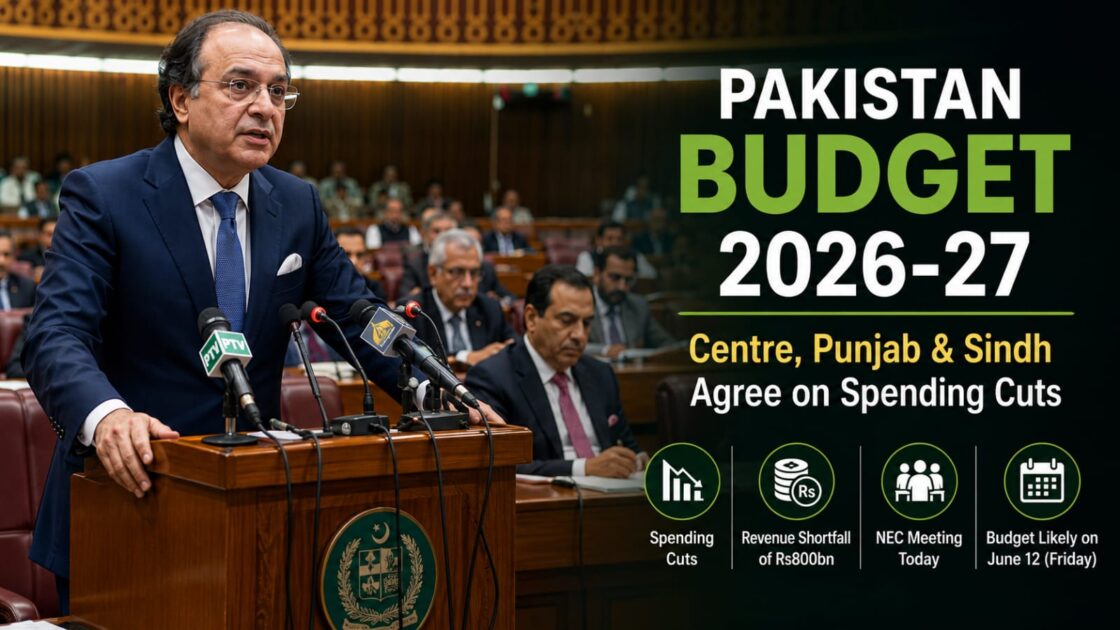
Pakistan’s federal and provincial governments agreed to reduce development and other expenditures in Budget 2026-27. This step is taken because authorities want to manage a significant revenue shortfall while creating additional fiscal space for national priorities.
According to reports, the federal government and provinces want to cover an estimated revenue gap of around Rs800 billion during the current fiscal year. They reached the agreement after discussions between the ruling Pakistan Muslim League-Nawaz (PML-N) and the Pakistan Peoples Party (PPP).
The development comes ahead of the National Economic Council (NEC) meeting, which is expected to finalize federal and provincial development plans before the budget is presented in parliament later this week.
Provinces to Freeze Revenue Gains
They agreed that provincial shares from the federal divisible pool will effectively remain at current-year levels. Any increase in tax collection by the Federal Board of Revenue (FBR) beyond this year’s revenue will come in the hands of the federal government.
For the implementation of this agreement, provincial governments will initially receive their full constitutional share. However, they will have to return the additional amount above the current year’s allocation through a special mechanism. Officials estimate that this could provide the federal government almost Rs1.3 trillion to Rs1.7 trillion in additional fiscal space during the next fiscal year.
Punjab and Sindh Agree to Development Cuts
Punjab and Sindh have reportedly agreed to reduce their Annual Development Programmes (ADPs) and cut other expenditures in support of the arrangement.
However, Khyber Pakhtunkhwa (KP) and Balochistan have not yet fully endorsed the agreement. Reports suggest the KP government is still conducting internal consultations regarding its participation in the NEC meeting and the proposed fiscal measures.
The spending cuts may affect development projects across the country. Combined federal and provincial development plans worth Rs4.715 trillion may face downfall as authorities attempt to balance fiscal requirements.
M6 Motorway Receives Funding Boost
As part of the negotiations, the PPP is believed to have secured increased federal funding for the long-delayed Sukkur-Hyderabad Motorway (M6) project.
The allocation for the project is expected to rise from Rs20 billion to approximately Rs70 billion in the upcoming fiscal year, along with commitments for faster implementation.
Impact on Salaries and Development Spending
According to sources the federal government had considered a salary increase of around 7 percent for employees based on inflation trends. However, it is difficult for provincial governments to offer similar increases.
According to the estimate of The federal Public Sector Development Programme (PSDP), Rs1.126 trillion, is also likely to face reductions. Provincial development budgets, originally projected at Rs3.138 trillion, may also be scaled back.
What Happens Next?
Before giving final approval, The NEC, Pakistan’s highest economic decision-making body, is expected to review the Annual Plan 2026-27, development spending proposals, and provincial development strategies.
This will be revealed in the upcoming budget on how the government plans to manage fiscal challenges while funding development projects, public services, and strategic national priorities. With spending cuts and revenue-sharing adjustments now on the table, Budget 2026-27 is shaping up to be one of Pakistan’s most closely watched financial plans in recent years.

Umar Daraz is the Founder and Editor of TodayEast, an independent digital news platform covering global affairs, business, technology, sports, and world rankings. He specializes in data-driven journalism, international news analysis, economic trends, and emerging technologies. Through TodayEast, he aims to provide accurate, accessible, and insightful reporting on the stories shaping the world.